EV Charger Installation Cost: What a Home Charger Costs in the UK in 2026
Quick answer: A standard 7kW smart home EV charger installation cost in the UK is £800 to £1,200 in 2026, including charger and fitting. Renters and flat owners can claim the OZEV grant EV charger scheme, 75% up to £500, bringing what you pay to roughly £300 to £700. The install usually pays for itself in under a year, because home charging costs about 7.5p a mile against about 23.4p a mile on a public rapid charger.
Contents
- How much does EV charger installation cost?
- What pushes the price up?
- The OZEV grant: who can claim £500?
- Which installer should you choose?
- What happens on installation day?
- Home charging vs public charging: the payback
- Try CarGarag’s free tools
- Key takeaways
- FAQs
- Sources
The first time you pay for a public rapid charge, the price stings. You plug in, grab a coffee, and come back to a bill that works out at more than twice what the same electricity would cost at home. That is when most drivers start asking how much to install EV charger at home. This guide answers with real 2026 prices: the home EV charger installation cost UK drivers actually pay, the grant that is still available, and the payback maths.

How much does EV charger installation cost?
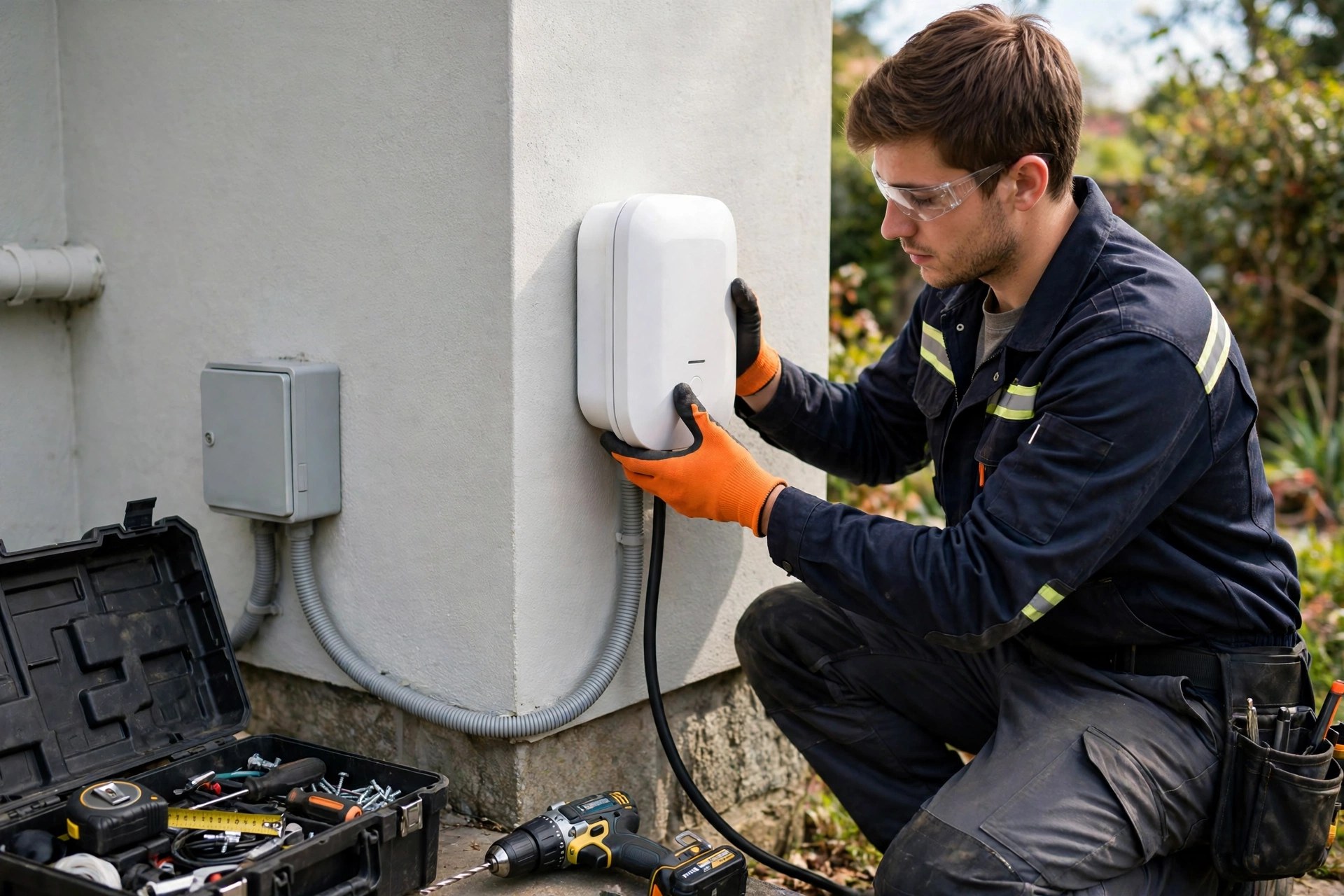
For most homes, the EV charger installation cost for a standard 7kW smart charger is £800 to £1,200, supplied and fitted. That covers the most common job: a wallbox on the outside wall, a short cable run to the consumer unit, and no extra electrical work. Hardware runs £400 to £750 and labour £300 to £500. About 9 in 10 home installs fall into this standard category.
| Charger type | Typical fully installed cost |
|---|---|
| 3kW trickle charger | £500 to £800 |
| 7kW smart charger (standard) | £800 to £1,200 |
| 7kW smart charger, tethered | £800 to £1,200 |
| 22kW charger (three-phase supply) | £2,500 to £5,000+ |
| Cross-pavement or on-street solution | £1,200 to £2,000+ |
All prices include VAT. Figures from MyBuilder, checked 21 November 2026.

The 7kW smart charger is the one almost everyone buys. It charges a typical EV overnight on a standard single-phase supply, and it is the only type that qualifies for the grant. A 3kW trickle charger is cheaper but slower.
What pushes the price up?
A standard install assumes a short cable run and a modern consumer unit. Three things push the price up.
- Consumer unit upgrade. If your fuse box is old or full, an upgrade costs £350 to £800. This is the most common extra.
- Long cable run. Cable beyond the included 10 to 15 metres costs about £25 to £40 per metre. A charger on a detached garage can add several hundred pounds.
- Trenching. If the cable has to be buried across a garden or driveway, trenching costs about £30 per metre.
A 22kW charger needs a three-phase supply, a separate upgrade for most homes. If you have no driveway, a permanent gully across the pavement costs £1,200 to £2,000 or more, and you need council permission first.
The OZEV grant: who can claim £500?
The OZEV grant EV charger scheme is the only government help left for home chargers. It pays 75% of the cost of a chargepoint socket, up to £500. The scheme runs until 31 March 2027, and the government calls this its final year.
You can claim if you rent your home, or own and live in a flat, and you have private off-street parking. You need written permission from your landlord or freeholder, an OZEV-authorised installer, and an eligible charger model.
If you own a house with a driveway, you cannot claim. The old homecharge scheme closed in April 2022. Any quote of £667 or more gets the full £500. On a £1,000 install the grant leaves £500 to pay, and on an £800 install it leaves £300. Apply on GOV.UK before the install.
Which installer should you choose?
Prices vary, and the cheapest quote is not always the best value. Use an OZEV-authorised installer for the grant. As a guide, Octopus charges £849 to £1,049, British Gas £999 to £1,299, and independent OZEV-authorised installers £700 to £1,400 for a standard 7kW install.
Get two or three quotes. Ask what is included, how long the cable run is, and whether the consumer unit needs work. A fixed-price quote that includes the survey is worth more than a low headline price.
What happens on installation day?
A standard install takes 2 to 4 hours on the day. The electrician mounts the wallbox, runs the cable to the consumer unit, and sets up the charger app on your phone.
- Survey first. Most installers survey first, to check the consumer unit, the cable route and the main fuse.
- DNO notification. A standard 7kW charger is notified to your network operator after fitting under G98. No pre-approval is needed.
- Testing and certification. The installer tests the circuit and gives you a Part P certificate. Keep it for when you sell the house.
From accepting a quote to the charger on the wall usually takes 2 to 4 weeks. A main fuse upgrade is done separately by your network operator, and it can add time.
Home charging vs public charging: the payback
This is the part that decides whether the install is worth it. Home electricity and public rapid charging are priced in different worlds.
| Where you charge | Cost per mile |
|---|---|
| Home, off-peak tariff (about 8p per kWh) | about 2.3p |
| Home, Ofgem price cap (26.32p per kWh) | about 7.5p |
| Public standard charger (54p per kWh) | about 15.4p |
| Public rapid charger (82p per kWh) | about 23.4p |
| Petrol car, 45 mpg (167.07p per litre) | about 16.9p |
Cost per mile at 3.5 miles per kWh. Rapid price is the Zapmap Price Index for October 2026, up from 79p in September.
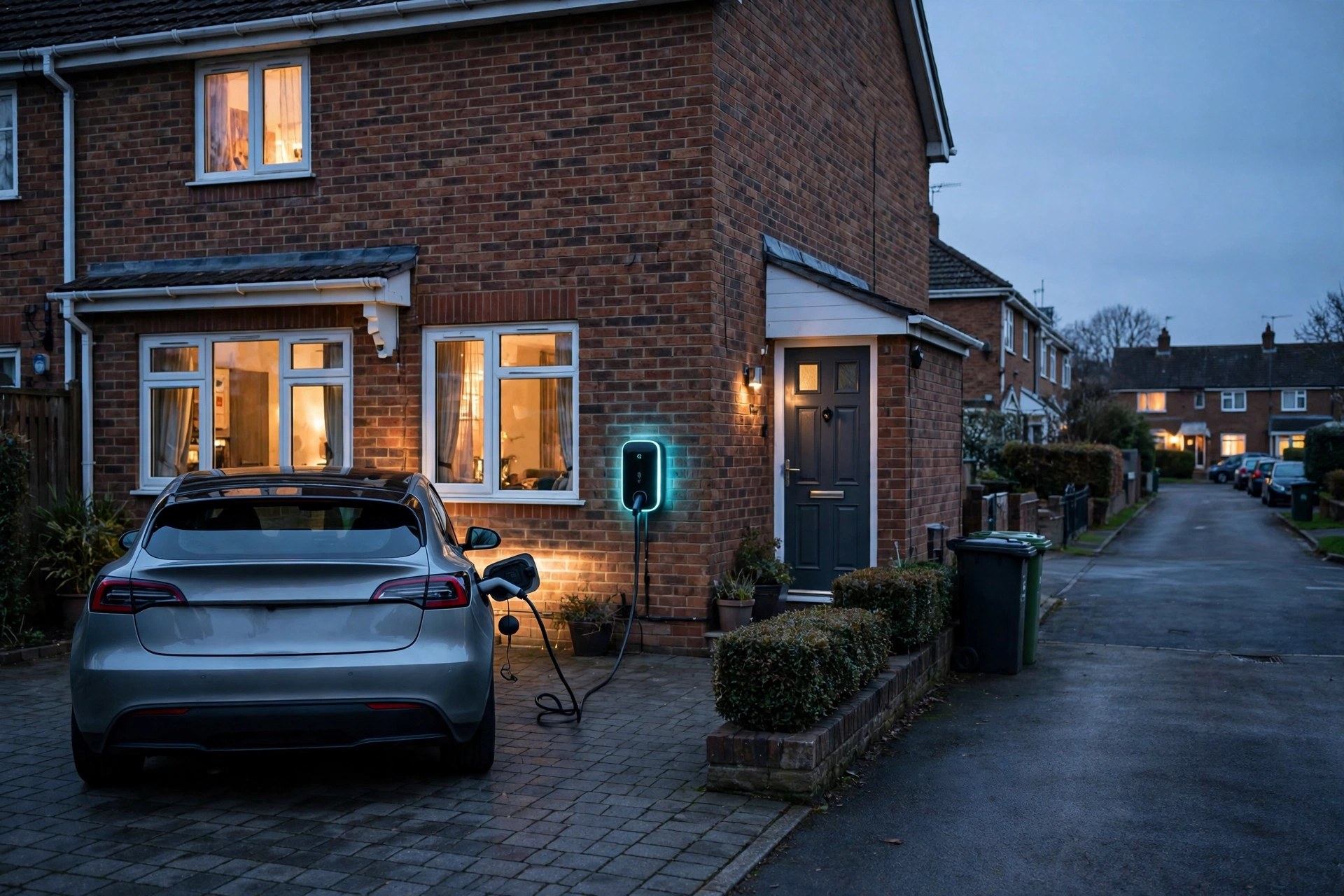
The gap is what pays for the charger. Home charging on the price cap costs about 7.5p a mile. A public rapid charger costs about 23.4p a mile, a gap of about 15.9p a mile.
Worked example: 8,000 miles a year
Take a driver who does 8,000 miles a year on the price cap. Home charging costs £600 a year (8,000 miles at 7.5p). The same miles on public rapid chargers cost £1,872 a year (8,000 miles at 23.4p). The difference is £1,272 a year, so a £1,000 install pays for itself in about 9 to 10 months, and a £1,200 install in about 11 months. These are illustrations, not guarantees.
Use our EV Charging Cost Calculator to run your own numbers, with your mileage, your tariff and the mix of home and public charging you actually use.
Try CarGarag’s free tools
Before you order, check the numbers with our free tools. The EV Charging Cost Calculator works out home and public charging for your mileage, and the EV vs Petrol Calculator compares running costs. Find them on the Free Car Tools page and in the EV Costs hub.
Key takeaways
- A standard 7kW smart home charger costs £800 to £1,200 fitted in 2026.
- The OZEV grant pays 75% up to £500 for renters and flat owners, until 31 March 2027.
- A consumer unit upgrade (£350 to £800) and a long cable run are the most common extras.
- Home charging costs about 7.5p a mile on the price cap, against about 23.4p a mile on a public rapid charger.
- For a driver doing 8,000 miles a year, the install typically pays for itself in under a year.
FAQs
How much does it cost to install an EV charger at home in the UK?
A standard 7kW smart charger costs £800 to £1,200, supplied and fitted. The OZEV grant pays 75% up to £500 for renters and flat owners, which can bring what you pay down to roughly £300 to £700.
How long does it take to install a home EV charger?
The fitting takes 2 to 4 hours. From accepting a quote to the charger on the wall usually takes 2 to 4 weeks, longer if your main fuse or consumer unit needs work.
Can I get a grant for a home EV charger?
Yes, if you rent your home or own and live in a flat, and you have private off-street parking. The OZEV grant pays 75% up to £500. House owners with a driveway cannot claim. The scheme runs until 31 March 2027.
Is it cheaper to charge an EV at home or in public?
At home, by a long way. Home charging costs about 7.5p a mile on the price cap and about 2.3p a mile off-peak. A public rapid charger costs about 23.4p a mile, and a petrol car at 45 mpg costs about 16.9p a mile.
Sources
MyBuilder, RenewableReady, We Power Your Car, Voltimum and LoveElectric installation guides; GOV.UK chargepoint grant pages; Ofgem price cap October to December 2026; Zapmap Price Index, October 2026. All figures checked on 21 November 2026.
Current electricity and charging prices: UK Car Cost Index. For more on home charging, read our home charging guide, and to compare electric and petrol costs, read is an electric car cheaper than petrol.
By CarGarag Editorial Team. Last updated 21 November 2026.
About CarGarag Editorial Team
The CarGarag Editorial Team researches UK car costs: VED rates from GOV.UK, fuel prices from DESNZ, electricity prices from the Ofgem price cap, and charging costs from Zapmap. Every calculator on this site runs in your browser, collects no data, and uses the figures in our UK Car Cost Index, checked and dated. We are independent: we do not sell cars, insurance or finance, and our guides explain the maths so you can check it yourself.